
.png)
Transfer pricing (TP) has traditionally been a world of massive Word templates, fragmented emails, and manual data entry. For many international tax and transfer pricing professionals, compliance documentation is a "bottom of the pile" task that only gets attention when a deadline or audit looms.
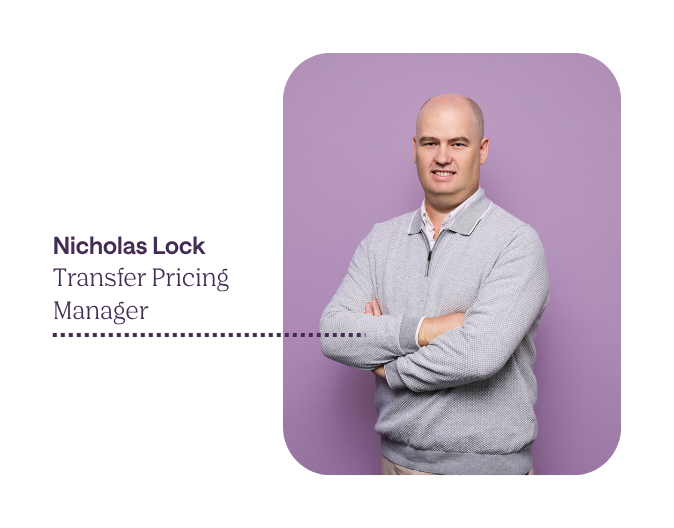
We sat down with Nick Lock, a key member of Aibidia’s Professional Services (PS) team, to discuss his journey from nearly a decade in Big Four to working at the forefront of TP technology. He shares why the "old way" is failing modern tax teams and how technology provides the control and agility required in today’s regulatory landscape.
Part 1: The Reality of Manual Transfer Pricing
Q: Nick, you spent nearly ten years within Big Four before joining Aibidia. What did "innovation" look like in that environment?
Nick: It’s firstly important to acknowledge, we did have some tech-enabled solutions, but processes were still incredibly manual. We worked on a template basis, creating everything in large Word documents. We had software that would read data points from SharePoint to compile files, but it was simplistic. While we had started to introduce a very basic tool that allowed clients to do some or all of the work themselves, the overall delivery model still lacked the flexibility and control teams increasingly need. It wasn’t really a modern compliance delivery model with a true spectrum of choice — it was still largely built around manual processes, with only limited room for clients to decide how much they wanted to own in-house. I joined Aibidia because I saw the potential for software to actually make everyone’s lives easier, rather than just automating bits of a broken manual process.
Q: What were the biggest day-to-day frustrations you faced as a TP professional before moving to a dedicated platform?
Nick: Formatting was a constant headache. Working with different technologies on top of a Word document created friction that was just frustrating. From a client perspective, it was also highly inefficient. Clients had to review country local files one by one, which led to a massive duplication of effort. In a centralized platform, you can flip this process and review common sections once, and have this populate numerous documents.
Q: Walk us through a typical documentation cycle in that manual world.
Nick: It was fragmented. You’d have a massive planning stage, then you’d manually split up Word templates and email them to clients for functional profile updates. Data came in via Excel, was manually moved to SharePoint, and then you’d generate a file that you knew wouldn't be perfect. You’d spend hours checking formatting and order. Communication was often stuck in emails because many clients didn't like the complex portals advisors used.
Part 2: The Aibidia Shift - Control and Speed
Q: How does your day-to-day work at Aibidia contrast with that experience?
Nick: The setup phase is more intensive because you are building a "single source of truth," but the payoff is immediate. Once the legal entity data and TP policies are in the system, generating a file is a one-click process. I’ve been here a year and I haven't had to worry about formatting once.
The real magic is the "roll-forward." In Year 2, everything you did in Year 1 is already there. You just update what’s necessary. We recently had a client who needed to turn around a file two days before a deadline because their local controllers hadn't provided data. Because the foundations were already in the system, they turned it around in two hours.
Q: For those who worry that adopting new tech is too labor-intensive, what do you say?
Nick: For our managed service clients, who benefit from a blend of our technology and advisory capabilities, our PS team does the heavy lifting. We take their existing documentation, handle the set up and then produce the local and master files. For teams who want to manage documentation in-house and reduce advisor dependency, we work with them to set up their policies and legal entity and transaction data. Once that foundation is in place, the admin work becomes almost null and void compared to the old manual way.
Part 3: Features That Change the Game
Q: As a TP expert in our Professional Service team, you’re essentially an Aibidia "power user." In your opinion, which features deliver the most value to Tax and TP professionals?
Nick: Two things: Data Management and Localization.
Within my consulting roles, we had to copy-paste data from Excel into SharePoint, entity by entity. In Aibidia’s TPDoc, you can map data across all entities at once. Our transaction management feature even lets you map a client’s unique Excel structure directly to our platform, which is a massive time-saver.
Secondly, the Country Summaries. Previously, I’d have to dig through fragmented SharePoint folders or third-party articles to find local rules. Aibidia has the legislation and specific recommendations for compliance documentation built-in, so you aren't searching across multiple sources to localize a file.
Part 4: From Compliance to Strategy: The Skills of a Modern Tax Professional
Q: How does this technology change the role of the TP professional?
Nick: Compliance documentation often falls to the bottom of the pile because it’s seen as repetitive and boring. When tech handles the "mundane," TP leaders are freed up for high-value work; think mergers and acquisitions, tax audits, or fielding queries from CFOs about new product tax implications.
Q: You mentioned audits. Is there a link between using tech and being "audit-ready"?
Nick: Absolutely. Some countries have a 30 or 60-day turnaround for files. If your data or documentation isn't ready and you’re relying on manual processes, that time is eaten up quickly. Having everything in a platform allows you to be proactive rather than reactive and incredibly agile.
Q: What is the biggest risk for companies that stay manual?
Nick: A lack of control and responsiveness. If you don't have a centralized library of data, you’re at the mercy of individual controllers' filing systems. I’ve seen new clients who haven't saved documentation from five years ago and have to start from scratch when an audit hits.
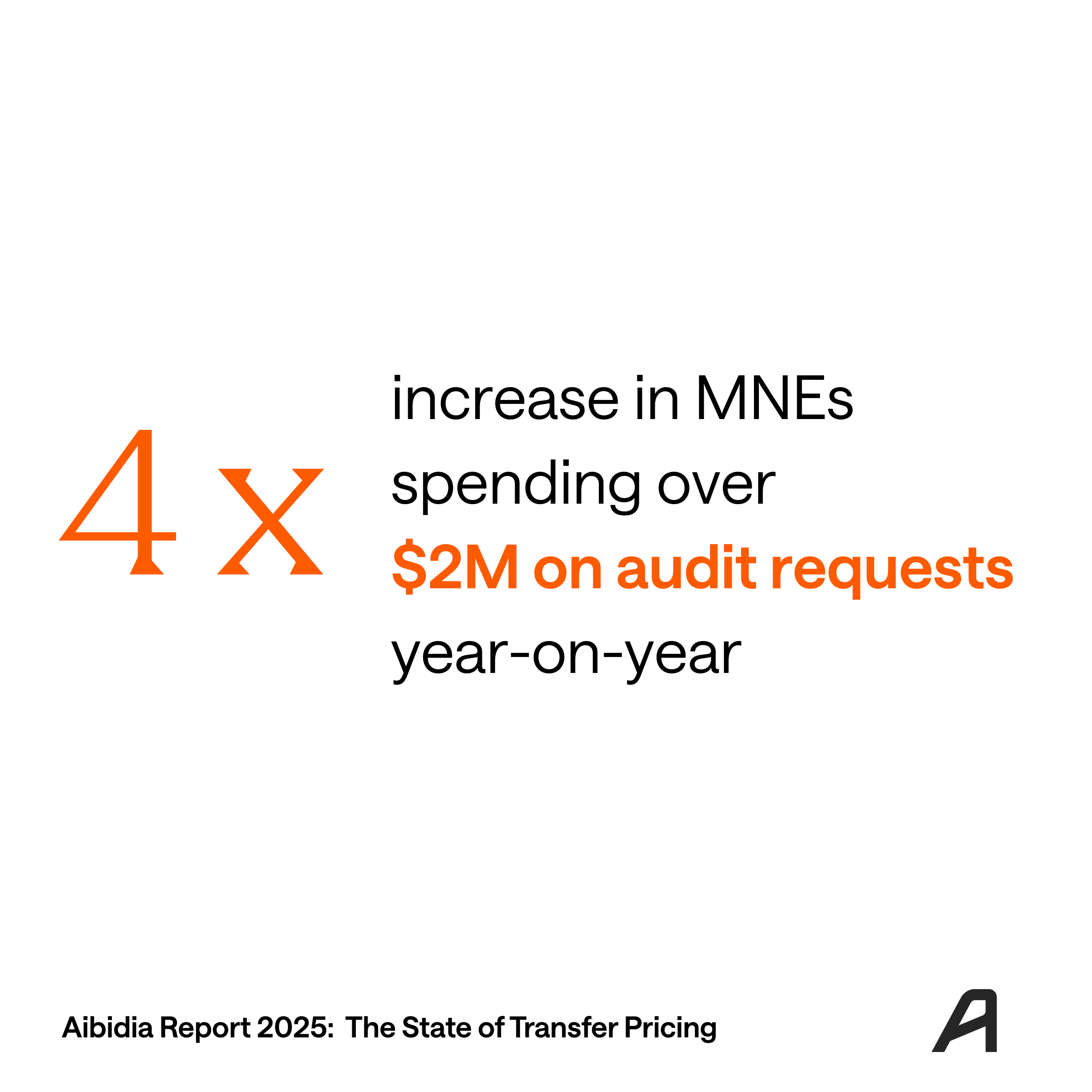
There’s also the cost. We worked with a team recently who spent €19,000 on just two local files because they were last-minute, one-off advisor requests. Teams can use technology to bring their whole approach to global compliance into a scalable, future-proof model.
Final Thoughts
Q: What is your single biggest piece of advice for TP leaders today?
Nick: Understand that technology is the only efficient and effective way to scale. Traditional, manual process grows too costly and lacks oversight and control. Teams should level up use of their advisors for high-level, specialized consultancy; there is no reason for teams to be at the mercy of ever-growing compliance costs and manual work, that tech can handle more accurately and efficiently.
Q: What excites you most about the future?
Nick: Managing the full TP lifecycle in one platform - from research and strategy to documentation and operational TP. Having a single platform that not only handles compliance but helps you manage audit controversy through AI and centralized data is where the industry is going, and I’m so excited to be part of the team building it.



.png)
.png)

.png)
.png)






.svg)

