
.png)
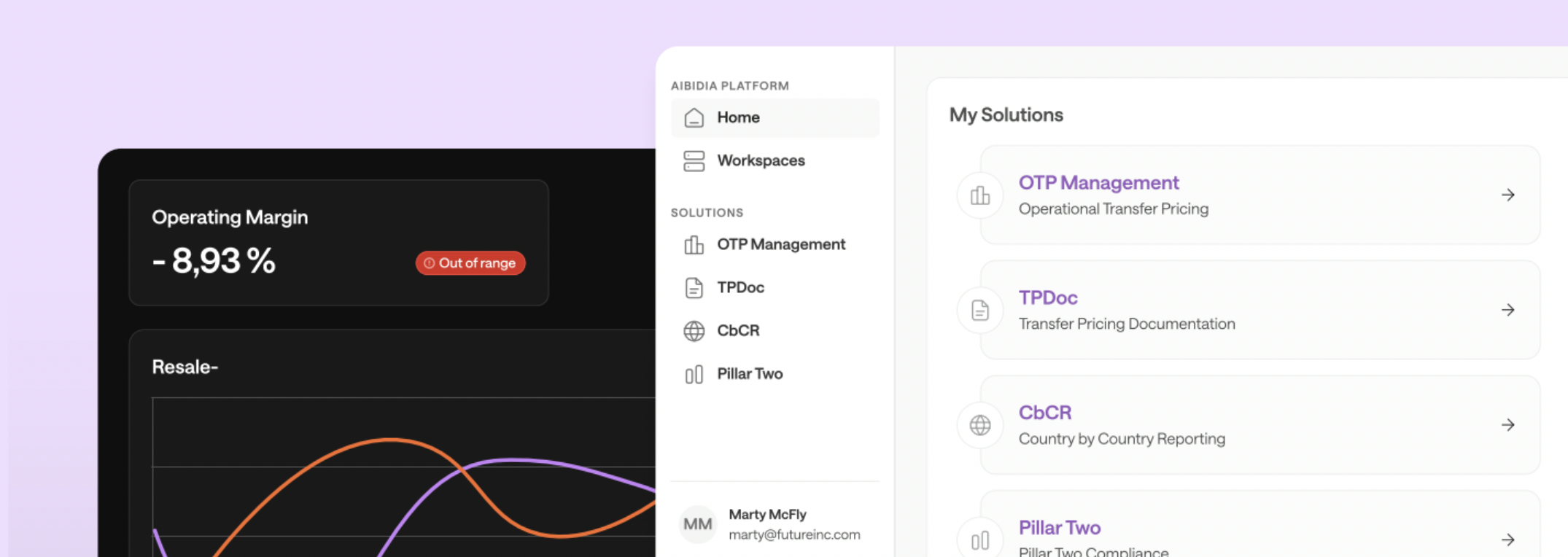
Operational Transfer Pricing (OTP) is about creating a controlled, repeatable and traceable process that connects data, people, systems and documentation.
We spoke with Roshni D’Silva, Professional Services expert at Aibidia, about what it takes to run OTP effectively.
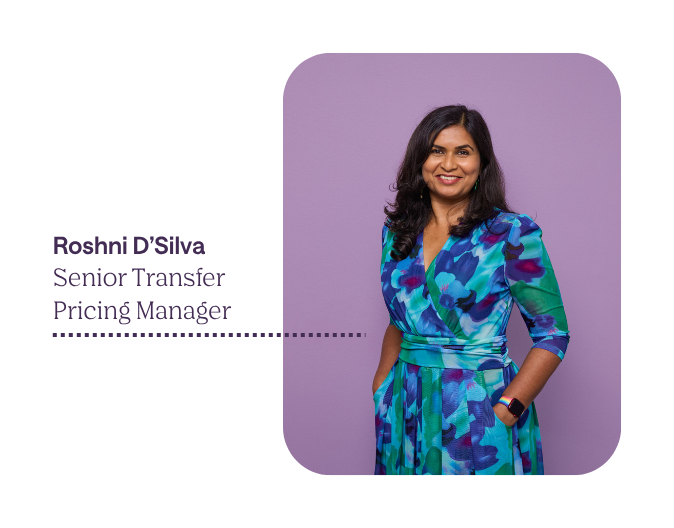
Roshni, can you tell us about your in-house transfer pricing experience?
Roshni: Thirteen years across Thomson Reuters, Refinitiv and London Stock Exchange Group, including seven years in an in-house Operational TP team, taught me one thing: transfer pricing is never static but needs to evolve with the business. Two major M&A events reshaped our models, systems, processes and governance.
What did the monthly OTP process look like in practice?
Roshni: Each month followed a disciplined close cycle to ensure the numbers were complete, accurate and explainable. Post close, ERP data was loaded into the transfer pricing tool and calculations were run through the platform. Results were reviewed using trend analysis and unusual movements investigated. Then TP entries were posted and reconciliations performed to confirm ledger balances agreed to the OTP platform.
Where did OTP processes most often break down?
Roshni: The biggest challenge was not the calculation itself. It was the lack of visibility across teams, systems and data sources.
When data moves between ERP systems, spreadsheets, local finance teams and TP tools, the risk of losing traceability is high.
Without a centralised source of truth, teams rely on different file versions, assumptions and cuts of data. If the TP team spends too much time reconciling files and tracing numbers, there is less time to assess whether the final result is correct, commercially explainable and defensible.
How important is collaboration in making OTP work?
Roshni: Collaboration is critical because TP does not operate in isolation.
The TP team depends on finance, accounting, controllership, tax, legal, systems and business teams. Without deliberate collaboration, the TP team can miss important changes, such as new contracts, restructuring, system change, or a material late posting during month close.
Scheduled quarterly catch-ups with business leaders helped us stay close to relevant material events and avoid surprises.
What did audits reveal about the OTP process?
Roshni: Audits showed very clearly whether the process was robust. We had an annual group audit every January, followed by statutory audits of the group’s subsidiaries. Latter were often more demanding because audit materiality was lower, resulting in several rounds of review and statutory adjustments.
We had to perform detailed reconciliations explaining operating profit before and after transfer pricing. That meant showing which costs were included/excluded, what adjustments had been booked, and why. It was not enough to present the final number. We had to explain how we got there and provide evidence. A clear audit trail was non-negotiable.
What role do controls play in a mature OTP process?
Roshni: Controls are what make OTP defensible. A robust process needs to show what data was used, what changed, who reviewed it, who approved it, and why the final result is supportable. That applies to data loads, mappings, calculations, manual adjustments and final outputs.
Clear ownership is equally important. Teams need to know who is responsible for loading data, reviewing exceptions, approving adjustments and signing off final results. In transfer pricing, the numbers matter, but the ability to support and explain those numbers matters just as much.
What separates a mature OTP function from one that is simply getting by?
Roshni: A mature TP team does not wait until year-end or audit to find out whether something has gone wrong. It performs transfer pricing regularly, ideally monthly, and uses trend and variance analysis to check whether results look right.
Less mature processes often become reactive year-end and audit clean-up exercises.
A mature OTP function is proactive. It monitors outcomes during the year, keeps documentation aligned with actual results, and maintains controls and audit trail needed to support results.
What does a modern OTP champion need to succeed?
Roshni: A modern OTP champion needs four connected components: strong relationships, granular data, a centralised source of truth and effective controls.
Relationships help TP teams understand business change before it affects the numbers. Granular data helps teams investigate movements, exceptions and entity-level results. A centralised source of truth helps prevent version-control issues, duplicated effort and inconsistent assumptions. Controls ensure the process is reviewable, repeatable and defensible.
What changes when teams move from manual OTP processes to a platform?
Roshni: The shift is from manual, risk-intensive effort to a more efficient, controlled, repeatable and scalable process.
I am working with a client who performed transfer pricing manually across multiple entities. They were delighted to see that the platform could produce the same report faster through automated interfaces and workflows.
Speed is not the only win; a platform makes the process structured and traceable. Data is centralised, calculations are repeatable, results can be reviewed, and adjustments can be supported. It also allows the process to scale as entities are added, removed, acquired or divested.
How do M&A and documentation fit into the OTP process?
Roshni: M&A creates operational complexity very quickly.
You may be dealing with new legal entities ,different ERP systems, different charts of accounts, different data formats and different local finance processes. If this is managed manually, every acquisition can create weeks of spreadsheet mapping and reconciliation.
It also increases the risk of losing traceability, because information is moving between different systems and teams. A platform approach helps by bringing data from different sources into a consistent structure, so the TP team can monitor P&L results, apply policies consistently and maintain visibility across the group.
For me, that is where a data-agnostic platform becomes powerful. It allows the TP function to adapt as the business changes, rather than rebuilding the process every time the group structure evolves.
OTPM and TP documentation also need to tell the same story. If operational results sit in one place and documentation sits somewhere else, the policy, agreements, benchmarks and actual outcomes can become disconnected. When agreements, benchmarks, policies, calculations, results and evidence are connected, the documentation reflects what is happening in practice, and the numbers can be supported by the underlying policy.
If you had to summarise the future of OTP in one message, what wouldit be?
Roshni: Modern OTP is about moving from reactive clean-up to proactive control.
The strongest TP teams will connect data, people, systems and documentation into one coordinated process. They will have the relationships to understand business change, the systems to monitor results, the controls to defend the outcome, and the documentation to support the position.
That is the future of Operational Transfer Pricing: connected, controlled and audit-ready. A modern OTP champion protects the integrity of the process by ensuring data is complete, results are explainable, controls are in place, stronger governance, and the organisation is ready before the auditor asks the first question.
Senior Transfer Pricing Manager